Please review the topics below to see ways that SOS™ has been used in real world applications:
Greenfield Sites
Greenfield sites or major extensions of an existing plant. The vendor(s) or prime contractor(s) recommend $7 million (pick any number) in spares. Consider the following: • You only budget for $4 million • The vendor(s) imply that to buy anything less or different could breach warranties and put your plant at risk! • How did they arrive at their figures? • Ask them ? You can probably guess ! ( they probably did ! ). • There are 5 variables that typically recur in every new/large extension site. • Spares recommended are too high (cost to you) • Some spares recommended are sometimes too low (risk to you) • Some should not even be on the list at all (cost to you) • While the list is missing others that should be included (risk to you) • You can validate the correct levels (correct optimization) So whether you use SOS™ for one day or one week or 6 months (up to and even past the project's completion date) you will save cash by not buying too many spares (and the carrying costs for many years). You will save cash by minimizing risks by not buying too few. You will satisfy the plant and general management that on day one you won't have to buy more spares that were not previously calculated for and also for others that may sit in your warehouse indefinitely. Vendors cannot quibble or raise warranty issues when your SOS™ assessment is done in an operating context by your people for the new plant (it cannot be taken from a catalog).Replenishment
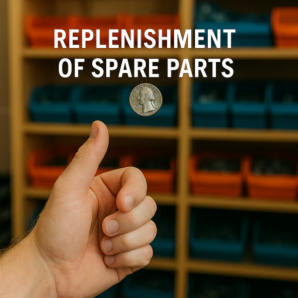
Your CMMS or ERP system has just hit its minimum and is recommending you buy more up to your maximum (min/max). Consider the following: Who set the min/max ? - The vendor ? What was the rationale ? A coin toss in conjunction with "gut" and some experience and maybe, (just maybe) some decent data. The replenishment area provides a key opportunity to safely and cost effectively reduce spares / costs i.e. the initial cash outlay and the subsequent 5 years or more of carrying costs, (even off-site, pooled and other "chain" techniques still cost you) that effectively allows you to "own it twice and maybe use it never". Using SOS™, even for a few hours, on contentious or expensive parts can demonstrate immediate and measurable savings. Don't delay ! Every day millions of spares are being sold, bought and moved across borders to reduce inventory taxes. This is especially true in two of the largest industries, Power and Chemicals.M & A - Mergers and Acquisitions
There are many derivatives of SOS™ usage. This is especially true of the volatile M&A activities of key process industries. Example: You are a large utility and you have acquired or are considering the acquisition of a large power generating station, group of power stations or even a T&D (Transmission and Distribution) operation. Using SOS™ you can now easily issue the edict "buy no more spares that have not been optimized by SOS™, or do buy spares that SOS™ recommends" • In the time it usually takes to identify and complete the targeted acquisition, tens of millions of dollars may have been wasted. • Because spares have continued to be purchased. • Because the synergy/commonality of your maintenance buying crews are not yet "aligned". • Of course some of this depends on circumstances: o Is it a hostile takeover ? o Are you in a position to issue such an edict ? The SOS™ generated results can tell you or at least give a good indication of whether you may be paying too much, that the acquisition is still buying too much or carrying too much. Even a cursory "run by" using SOS™ could pay for your entire M&A costs. Using SOS™ also demonstrates to the newly acquired entities' personnel that the 'new owners' are not adopting a "slash and burn" philosophy but have a genuine desire to achieve consensus and teamwork.Cyclical Events
Similarly to M&A, and business generally, competition and business cycles are always lurking nearby. In particular industries every step is being taken (or should be) to reduce costs (without any additional risk to your business). Even though maintenance often represents 15% of revenue (in process industries) versus 1½% for the high profile IT industry, it often gets the short end of the stick. There are endless articles in the various trade press discussing how the "glamour" parts of business take precedent over the unfashionable maintenance operations. Remember "Maintenance is a process NOT an event" It is an all important process and an opportunity, rather than "a pain in the butt necessity" as it has been occasionally described in the press. Some businesses have seriously reviewed maintenance and reliability and are taking limited steps to improve, while many merely pay lip service (or no "service") to this important part of any process operation. The vast majority of senior management cannot tell you what the macro costs of maintenance are and therefore they are unaware what the sub-set costs are i.e. spares dollar value, spares holding costs, outage frequency, manpower costs, reliability expenditure or even who are the people directly in charge of these all important functions. To be competitive business must not overlook any opportunity to be strong and reduce costs (without risks). Using SOS™ you will safely chop millions from your operating budget.Competition
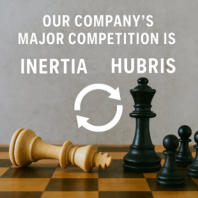
Our major competition is inertia and hubris. There really is nothing like SOS™. So whether it is occasional or on a dedicated focused basis SOS™ will help you reduce costs safely.Existing Inventory
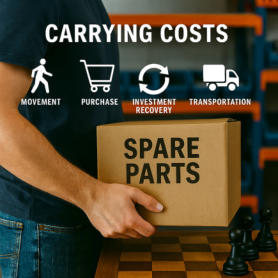
Much of the typical 25-30% annual "carrying costs" of your process spares inventory involves physical movement, purchase, investment recovery, re-certification and transportation. Beyond the obvious cost of money and lost opportunity costs and the many other on-going costs, it is clearly better to have never purchased (unnecessarily) the spares to begin with. It is also possible that your operating context has changed.Risk Averse
You may be running "dangerously" low of a spare. SOS™ will help here also. Sometimes people know they are low, but play the dangerous juggling game of trying to satisfy the maintenance department, and the finance people simultaneously. Extended lost production is obviously the major risk. But think again. It is not only about extended production delays (due to lack of spares) it is also dangerous for personnel as well. i.e. Plants who do not have a spare are subject to the temptation to improvise, including using repaired (instead of new) spares, that may be flawed in some way or are inappropriate no matter how good the repair may be (i.e. a head gasket for your car's engine).



How will SOS
TM
Save Me Money?
Quick Links

Strategicorp

How will SOS
TM
Save Me Money?
Please review the topics below to see ways
that SOS™ has been used in real world
applications:
Greenfield Sites
Greenfield sites or major extensions of an existing plant. The vendor(s) or prime contractor(s) recommend $7 million (pick any number) in spares. Consider the following: • You only budget for $4 million • The vendor(s) imply that to buy anything less or different could breach warranties and put your plant at risk! • How did they arrive at their figures? • Ask them ? You can probably guess ! ( they probably did ! ). • There are 5 variables that typically recur in every new/large extension site. • Spares recommended are too high (cost to you) • Some spares recommended are sometimes too low (risk to you) • Some should not even be on the list at all (cost to you) • While the list is missing others that should be included (risk to you) • You can validate the correct levels (correct optimization) So whether you use SOS™ for one day or one week or 6 months (up to and even past the project's completion date) you will save cash by not buying too many spares (and the carrying costs for many years). You will save cash by minimizing risks by not buying too few. You will satisfy the plant and general management that on day one you won't have to buy more spares that were not previously calculated for and also for others that may sit in your warehouse indefinitely. Vendors cannot quibble or raise warranty issues when your SOS™ assessment is done in an operating context by your people for the new plant (it cannot be taken from a catalog).Replenishment
Your CMMS or ERP system has just hit its minimum and is recommending you buy more up to your maximum (min/max). Consider the following: Who set the min/max ? - The vendor ? What was the rationale ? A coin toss in conjunction with "gut" and some experience and maybe, (just maybe) some decent data. The replenishment area provides a key opportunity to safely and cost effectively reduce spares / costs i.e. the initial cash outlay and the subsequent 5 years or more of carrying costs, (even off-site, pooled and other "chain" techniques still cost you) that effectively allows you to "own it twice and maybe use it never". Using SOS™, even for a few hours, on contentious or expensive parts can demonstrate immediate and measurable savings. Don't delay ! Every day millions of spares are being sold, bought and moved across borders to reduce inventory taxes. This is especially true in two of the largest industries, Power and Chemicals.M & A - Mergers and
Acquisitions
There are many derivatives of SOS™ usage. This is especially true of the volatile M&A activities of key process industries. Example: You are a large utility and you have acquired or are considering the acquisition of a large power generating station, group of power stations or even a T&D (Transmission and Distribution) operation. Using SOS™ you can now easily issue the edict "buy no more spares that have not been optimized by SOS™, or do buy spares that SOS™ recommends" • In the time it usually takes to identify and complete the targeted acquisition, tens of millions of dollars may have been wasted. • Because spares have continued to be purchased. • Because the synergy/commonality of your maintenance buying crews are not yet "aligned". • Of course some of this depends on circumstances: o Is it a hostile takeover ? o Are you in a position to issue such an edict ? The SOS™ generated results can tell you or at least give a good indication of whether you may be paying too much, that the acquisition is still buying too much or carrying too much. Even a cursory "run by" using SOS™ could pay for your entire M&A costs. Using SOS™ also demonstrates to the newly acquired entities' personnel that the 'new owners' are not adopting a "slash and burn" philosophy but have a genuine desire to achieve consensus and teamwork.Cyclical Events
Similarly to M&A, and business generally, competition and business cycles are always lurking nearby. In particular industries every step is being taken (or should be) to reduce costs (without any additional risk to your business). Even though maintenance often represents 15% of revenue (in process industries) versus 1½% for the high profile IT industry, it often gets the short end of the stick. There are endless articles in the various trade press discussing how the "glamour" parts of business take precedent over the unfashionable maintenance operations. Remember "Maintenance is a process NOT an event" It is an all important process and an opportunity, rather than "a pain in the butt necessity" as it has been occasionally described in the press. Some businesses have seriously reviewed maintenance and reliability and are taking limited steps to improve, while many merely pay lip service (or no "service") to this important part of any process operation. The vast majority of senior management cannot tell you what the macro costs of maintenance are and therefore they are unaware what the sub-set costs are i.e. spares dollar value, spares holding costs, outage frequency, manpower costs, reliability expenditure or even who are the people directly in charge of these all important functions. To be competitive business must not overlook any opportunity to be strong and reduce costs (without risks). Using SOS™ you will safely chop millions from your operating budget.Competition
Our major competition is inertia and hubris. There really is nothing like SOS™. So whether it is occasional or on a dedicated focused basis SOS™ will help you reduce costs safely.Existing Inventory
Much of the typical 25-30% annual "carrying costs" of your process spares inventory involves physical movement, purchase, investment recovery, re-certification and transportation. Beyond the obvious cost of money and lost opportunity costs and the many other on-going costs, it is clearly better to have never purchased (unnecessarily) the spares to begin with. It is also possible that your operating context has changed.Risk Averse
You may be running "dangerously" low of a spare. SOS™ will help here also. Sometimes people know they are low, but play the dangerous juggling game of trying to satisfy the maintenance department, and the finance people simultaneously. Extended lost production is obviously the major risk. But think again. It is not only about extended production delays (due to lack of spares) it is also dangerous for personnel as well. i.e. Plants who do not have a spare are subject to the temptation to improvise, including using repaired (instead of new) spares, that may be flawed in some way or are inappropriate no matter how good the repair may be (i.e. a head gasket for your car's engine).
Strategicorp
QUICK LINKS